How to Harvest Honey Without Making a Sticky Mess: Equipment and Timing
Honey harvesting has a reputation for chaos: sticky door handles, honey on your phone, a smear on your sleeve that you find a fortnight later. Most of that mess comes from three mistakes. Lifting frames before they are ready, working with the wrong kit, and leaving the cleaning until the end. Sort those out and taking a crop from two or three hives becomes a calm, almost enjoyable afternoon.
Wait until the honey is ripe
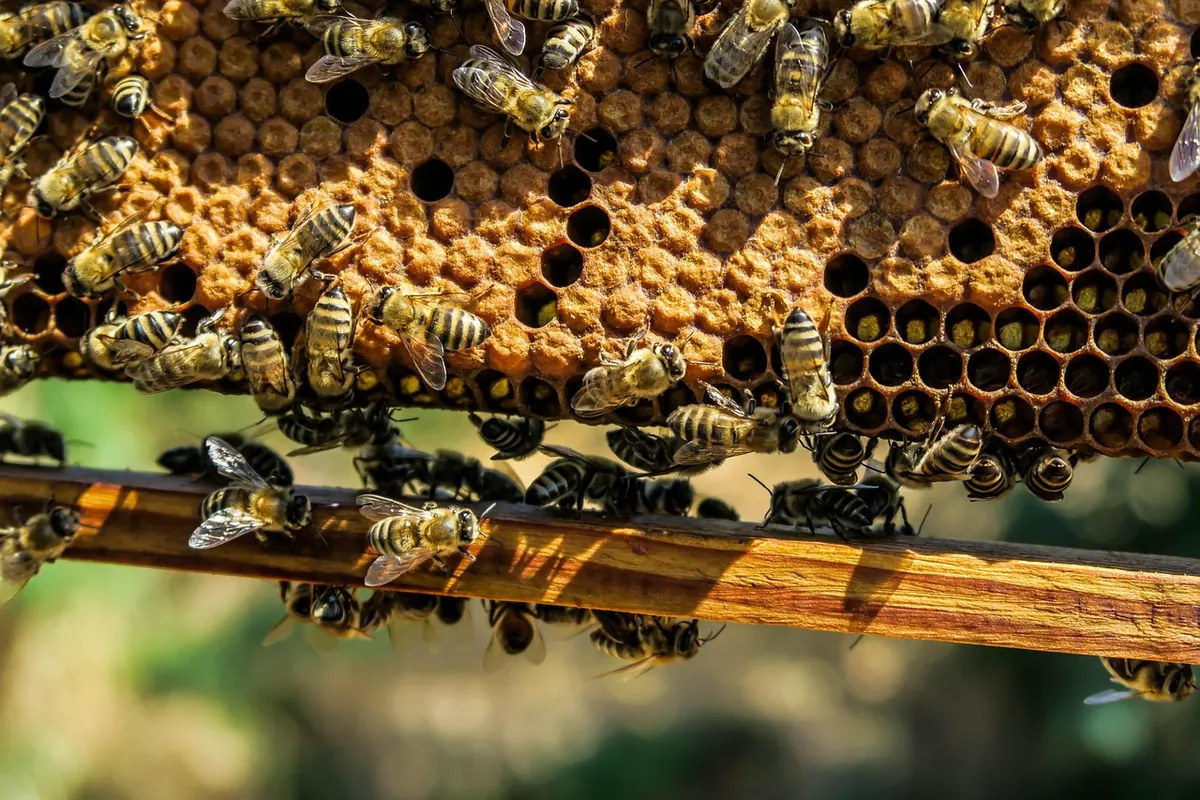
Uncapped honey is mostly water, and it will ferment in the jar. The signal you are waiting for is wax. Bees cap a cell only when the nectar inside has been dried down enough to keep, so a super where most of the comb is sealed is the one to take. Lift a frame from the middle and look properly before you plan anything.
A refractometer takes the guesswork out of it, and most beekeepers work to a moisture reading in the high teens. There is a quick field test as well: hold the frame level and give it a sharp downward jerk. If nectar flicks out, leave it another week. If nothing moves, it is ready.
Timing matters as much as ripeness. Aim for a warm, still morning at the end of a flow, when the foragers are out and the bees left behind are calm. Cold frames give brittle cappings and honey so thick it refuses to run, which turns a neat job into a wrestling match.
The kit that earns its place
None of this is expensive, but the wrong tools double the work.
- A clearer board with a Porter escape or a rhombus escape
- A sharp uncapping knife, serrated or heated, plus a jug of hot water to dip it in
- An uncapping tray, or a deep baking tray with a cake rack inside
- An extractor, manual or electric, sized to the number of frames you take
- Two food-grade buckets, one fitted with a honey gate
- A double strainer, or a coarse sieve sitting over a fine one
- A refractometer, if you like having a number to work to
- Old towels, a washing-up bowl of hot water, and plastic sheeting for the floor
On the extractor: buy or borrow one that takes at least four frames. Two-frame models work, but you will be spinning for a long time and the honey cools between loads.
Get the bees out of the way first
Fit a clearer board under the supers the day before you plan to extract. By the following morning nearly every bee will have moved down into the brood box, and you can lift the boxes off without smoking or brushing anything. If you must brush bees off, do it gently and over the hive, but it riles them and it is rarely necessary.
Carry the supers somewhere bee-proof: a closed shed, a garage, or a kitchen with the door shut and the windows closed. Bees follow the smell of honey, and a super left sitting on an open hive stand will gather a crowd within minutes. Cover each box with a cloth as you move it.
Uncapping: smooth strokes, less mess
Find a room with a hard floor and wipeable surfaces, and set the temperature at around 25°C. Honey needs warmth to flow, but a hot kitchen is miserable to work in. Lay plastic sheeting or newspaper over the floor, put the extractor on it, and stand the uncapping tray beside the extractor. Keep a bowl of hot water and a cloth within reach and use them often.
Take one frame at a time. Hold it upright over the tray, rest one edge on the rack, and draw the knife upward in long, smooth strokes, following the wax rather than sawing at it. Dip the knife in the hot water between frames and wipe it. Angle the frame slightly toward the tray so the honey runs off the comb and into the tray rather than down your forearm. You are only removing the caps, so do not cut deeper than you need to.
Cappings hold a surprising amount of honey. Leave them in the tray or a colander over a bowl for a day and it drains out. Use that honey, and rinse what is left for rendering into wax. Never feed honey from an unknown source back to your bees, as it can carry disease.
Extracting and straining
Load the extractor evenly. Spin slowly at first, because a fast start flings comb out of the frames before the honey has left it, then build up speed as the frames get lighter. Radial extractors usually need a single spin; tangential ones need the frames turning and a second pass. When they stop dripping, open the gate and let the honey run through the strainer into the bucket.
A double strainer, coarse over fine, catches wax and the odd bee. Let it drip through at its own pace. Pushing it with a spoon only forces bits through. Leave the bucket to stand in a warm room for a day or two, then skim off the bubbles and fine wax that rise to the surface, or simply draw clean honey from the gate above the sediment.
Clean up as you go
Hot water is the secret. Cold water turns honey into a tacky film that clings to everything; hot water dissolves it in seconds. Wash each tool as soon as you have finished with it, while the honey is still warm, and wipe the inside of the extractor with hot damp cloths before anything dries. Lay sticky cloths out in the garden for the bees to clean, then wash them as normal. When you are done, roll the plastic sheet up with the mess inside and bin it.
Wash your hands in warm water before you answer the phone. Better still, leave the phone in another room.
The order of the day
Everything in a honey harvest goes better unhurried. Ripe frames lift cleanly, warm honey runs, and a wiped knife cuts wax instead of tearing it. If you do one thing, set up before you bring the supers in, and clean as you go rather than afterwards.
- Check the frames are capped and the moisture is where you want it.
- Fit the clearer board the day before.
- Set up the sticky zone before the honey comes indoors.
- Uncap and extract one frame at a time until you find a rhythm.
- Strain, cover the buckets and leave them to settle.
- Wash everything
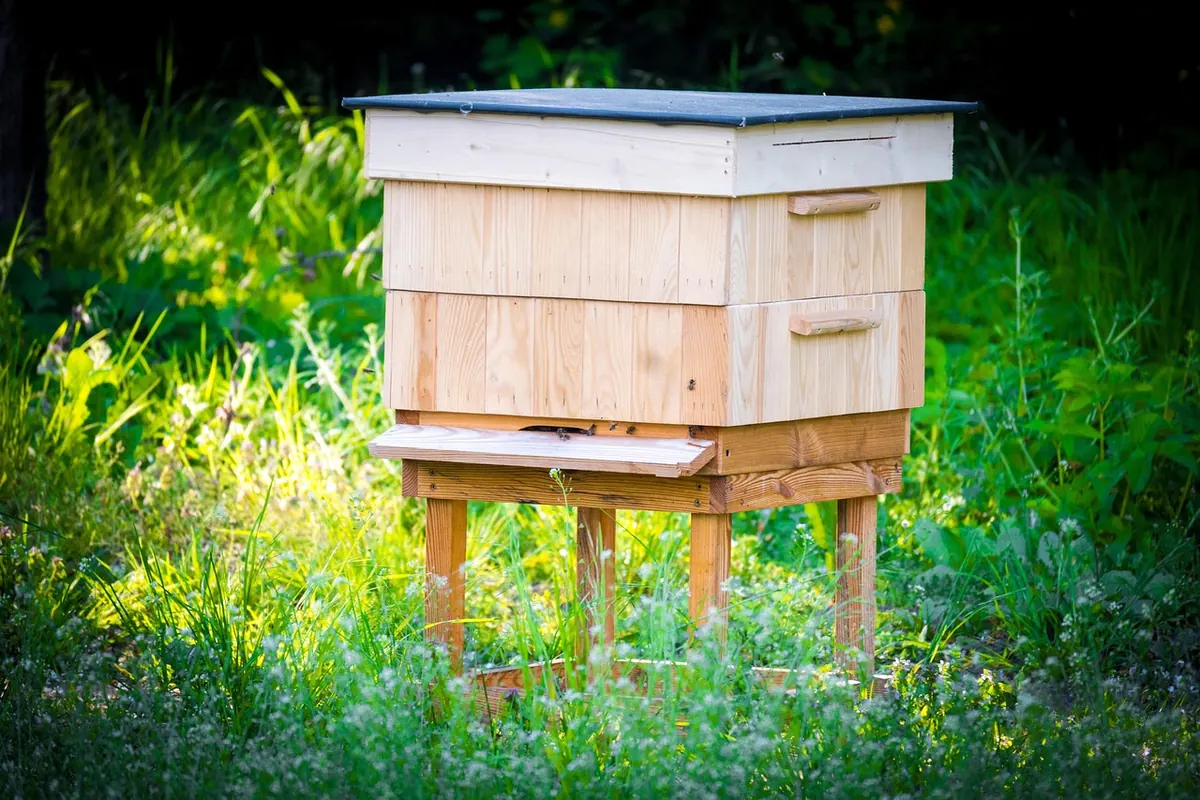
Photo: Pexels / Pixabay

Winterising Your Apiary: How to Prepare Hives for a British Winter
A practical guide to getting hives through a British winter: autumn feeding, varroa treatment, mouse...
Building vs Buying a Beehive: Cost, Time and Convenience Compared
Flat-pack, ready-made or built from scratch? A practical look at what each beehive option really costs in...
About Us