Choosing Your First Bee Suit: Ventilated vs Traditional vs Jacket
Your first inspection will be remembered for the bees, not the clothing. But the clothing decides whether you enjoy it. A suit that traps heat makes you hurry. A veil that presses against your face makes you flinch. A gap at the waist turns a calm inspection into a small emergency. Three options cover most of the market: traditional full suits, ventilated full suits and jackets. The right choice comes down to your colonies, your site and how many hives you plan to keep.
Start With Protection, Not Fabric
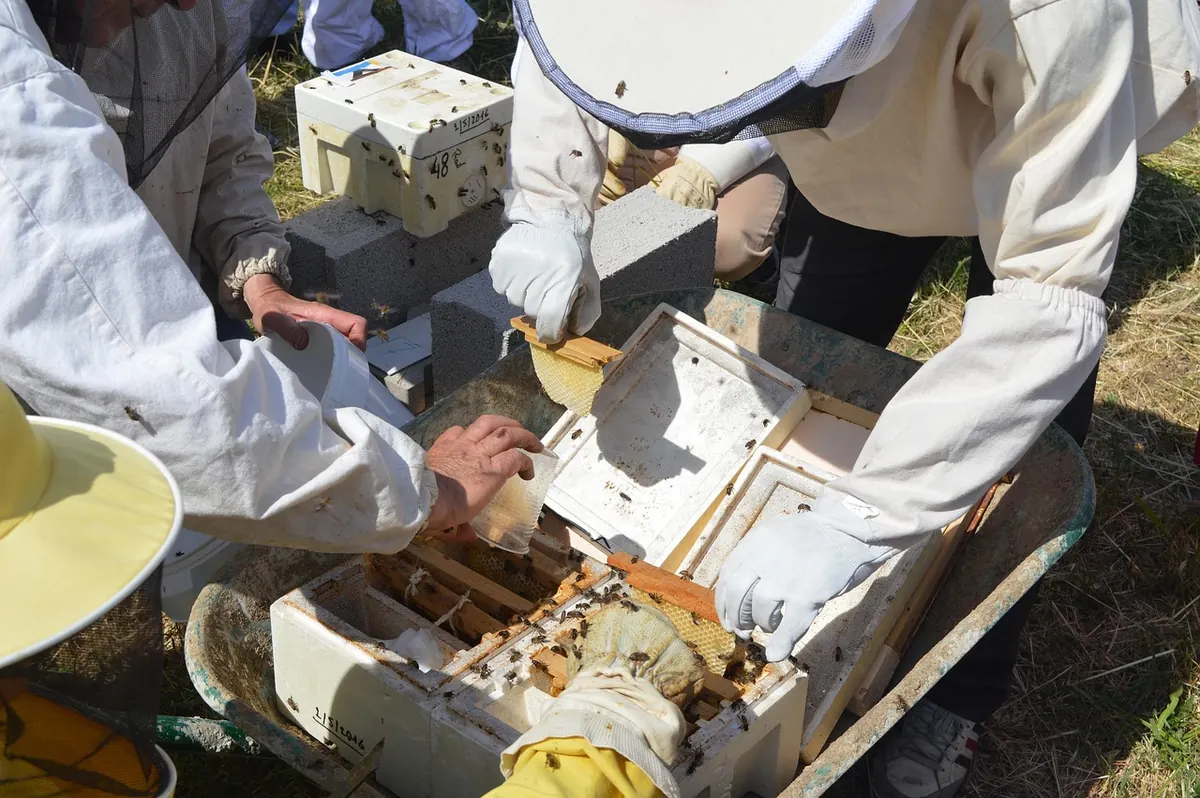
Every bee suit is a compromise between barrier and airflow. Traditional suits use woven cotton or polycotton, sometimes with doubled panels over the chest and arms, and bees struggle to sting through them. Ventilated suits use a three-layer mesh that holds the outer surface away from your skin, so air moves and stingers rarely reach you. The catch with mesh is contact: press it flat against a shoulder or forearm and a determined bee can still get through. That is why ventilated suits work best worn over a thin long-sleeved top rather than on bare skin.
Whatever you buy, the weak points are the same: wrists, ankles, the join between jacket and trousers, and the veil zip. Check those before you check the colour.
Traditional Suits: The Steady Default
Most associations keep a few traditional suits for beginners, and there is a reason. They are relatively inexpensive, hard-wearing and forgiving. Cotton and polycotton drape well, so the veil holds its shape away from your face, and the fabric does not snag on every hawthorn branch between the car park and the apiary. On a cool May morning or an October afternoon hefting brood boxes, the weight is a benefit rather than a burden.
The trade-off is heat. In a humid July, a heavy suit turns twenty minutes of frame lifting into something close to a sauna, and a sweaty beekeeper rushes. Traditional fabric also soaks up water, so a light shower leaves it damp and heavy. Choose pale colours: dark fabric can make bees more defensive, and light suits are easier to spot in long grass.
Ventilated Suits: Airflow for the Warm Months
A ventilated suit is built for the days when you are glad of a breeze. The mesh lets air pass through while keeping the layers apart, so you stay noticeably cooler through a long session with several hives. If you keep more than two or three colonies, inspect at midday, or simply run warm, this is often the difference between finishing calmly and finishing quickly.
Expect to pay more than for a traditional equivalent, and expect to look after it. Mesh catches on brambles, barbed wire and rough hive stands, and cheaper versions fray at the seams. Hoods in this style tend to be larger and stiffer, which some beekeepers love for visibility and others find awkward in a shed. Try one on before you commit, and wear a layer underneath across the shoulders, where a hive strap can press the mesh against your skin.
Jackets: Light, Cheap, and Not for Everything
A jacket covers you from shoulders to hips. It is the cheapest entry point, the coolest option on a hot day and the easiest thing to pull on for a quick look at one hive. For a beginner with a couple of gentle colonies on a quiet site, a jacket plus thick trousers is a reasonable place to start.
The limitation is that it stops at the waist, and bees walk upwards. Tuck the jacket into your trousers, wear something substantial rather than leggings or shorts, and keep your wellies on, or you will meet the gap between hem and boot. Jackets are also awkward when you lift a full super overhead, because the hem rides up as you reach. If your bees are defensive, or you plan to expand, a full suit is the safer purchase.
Matching Gear to UK Weather
British seasons rarely settle into one pattern: cool damp spring inspections, humid weeks in June and July, then chillier autumn work. That variability is why so many beekeepers own more than one option.
- Cool spring and autumn: a traditional suit is comfortable and robust without extra layers.
- Hot, humid summer: a ventilated suit keeps you working longer and more carefully.
- One or two hives, short visits: a jacket and tough trousers will do.
- Several hives, long sessions, touchy colonies: a full ventilated suit earns its cost.
- Rain: neither fabric is waterproof, and a wet suit is heavy and cold. Postpone the inspection instead.
Fit and the Details That Bite You Later
Sizing is where most first purchases go wrong. Buy to fit over the clothing you will actually wear, and take your height into account as well as your chest: a suit that is too long trips you up, and one that is too short pulls the veil down towards your shoulders.
When you try one on, run through this:
- Squat, raise both arms overhead and turn your head. The veil should stay clear of your face and the cuffs should not ride up.
- Check the veil zip runs smoothly and meets the collar with no gap.
- Look for elasticated cuffs or thumb loops, elasticated or zipped ankles, and a loop or pocket for your hive tool.
- Inspect the seams and the hood for snags, especially on mesh.
- Confirm you can wash it as instructed; most suits need a cool wash and careful handling of the veil.
Gloves and footwear deserve the same attention. They are not part of the suit, but they are part of the barrier, and a gauntlet that rides up is where most beginner stings happen.
A Sensible Way to Decide
If you are starting with one or two hives and a calm colony, buy a well-fitting jacket, thick trousers and proper gloves, and put the savings towards a spare veil. If you expect to grow, inspect in warm weather, or keep bees somewhere you cannot choose your timing, go straight to a ventilated full suit in a pale colour and your correct size. If you will be working through a British spring and autumn, a traditional suit remains hard to beat.
Two final notes. Anyone with a known reaction to insect stings should speak to their GP or an allergy clinic before handling a colony. And before you lift your first frame, check what insurance or cover your local association provides, so you know where you stand if something goes wrong.
Photo: Kawê Rodrigues / Pexels

Winterising Your Apiary: How to Prepare Hives for a British Winter
A practical guide to getting hives through a British winter: autumn feeding, varroa treatment, mouse...
Building vs Buying a Beehive: Cost, Time and Convenience Compared
Flat-pack, ready-made or built from scratch? A practical look at what each beehive option really costs in...
About Us